About Heal Within Therapy
Meet the Therapist
Hello, I’m Nakul Narendran.
Consultant Psychologist and Psychotherapist
From a young age, I found myself drawn towards understanding people, their experiences, struggles, emotions, and the patterns that shape their lives. Over time, this interest grew into a passion for psychology and psychotherapy.
I believe that many of the difficulties we face are not random. The ways we think, feel, behave, and relate to others often develop for a reason. By understanding these patterns and making the necessary changes, people can move towards greater relief, growth, and well-being.
Through psychotherapy, my aim is to help individuals better understand themselves, navigate challenges more effectively, and create meaningful change in their lives.
Services



Individual Therapy
A space to better understand yourself, work through emotional difficulties, navigate life challenges, and move towards meaningful personal growth.
Couple Therapy
Support for couples experiencing difficulties in communication, conflict, emotional connection, trust, or other relationship concerns.
Adolescent & Young Adult Support
Helping adolescents and young adults navigate emotional, academic, social, and personal challenges during important stages of development.

Parent Consultation and Psychoeducation
Guidance and support for parents seeking to better understand and respond to their child’s emotional, behavioural, or developmental needs.
School Mental Health Programs
Mental health awareness sessions, life skills training, psychoeducation, and student support initiatives for schools and educational institutions.
Workshops & Training
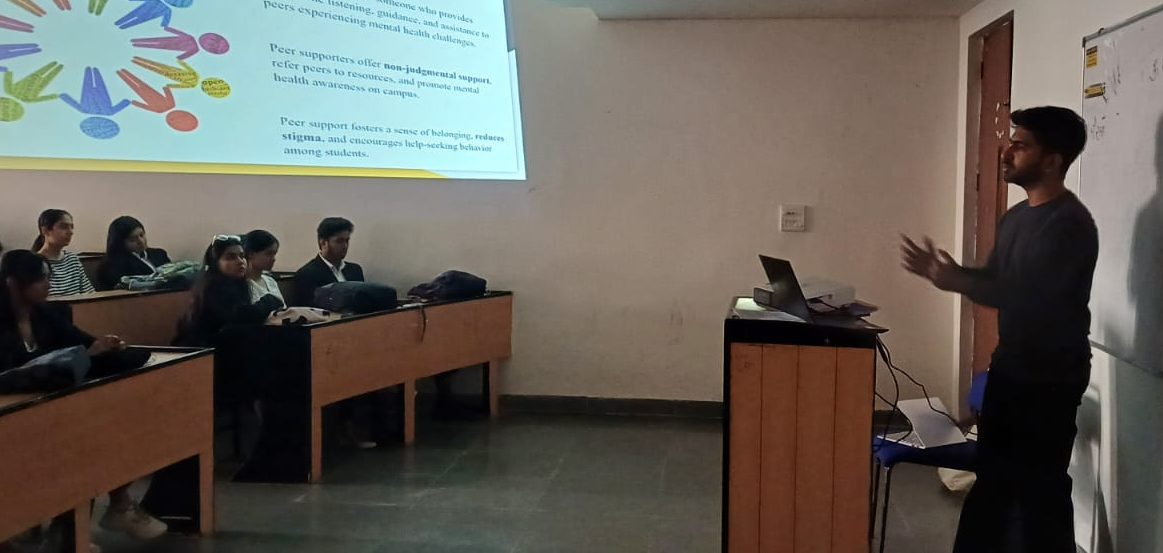
Interactive sessions on mental health, emotional well-being, communication, relationships, stress management, and personal development for schools, colleges, and organizations.
Testimonials (Google)
I had a really good session with Nakul Narendran. He is very easy to talk to and makes you feel comfortable right away. If you’re nervous about starting therapy or just aren’t sure where to begin, I’d definitely recommend booking a session with him
— Former Client
Our sessions feel warm, honest, and challenging in the best way; I leave each week with clarity and practical steps forward.
— Former Client
I was nervous to start therapy, but from the first call, I felt respected, understood, and supported in making real changes.
— Former Client


List of articles
- Relationship Dynamics
- Anxious Attachment
- Understanding the Nervous System
- Patterns beneath Anxiety
- When a relationship becomes more than a Relationship
- Withdrawal in Adolescents
All the articles that I have posted here are my observations and reflections from my experiences and learnings in the field of psychology. Viewers can email or WhatsApp me to get insights into any of the areas that they would like to explore more in the aspects of Mental Health
THANK YOU
Driven by the Past: A Life Scripted by Unmet Needs

Every stage of life naturally brings its own set of challenges, but some people are forced to face burdens far too heavy for their age or life stage. There is a saying in Malayalam, “Thumbiye kondu kalledupikkuruthu”; you cannot ask a dragonfly to lift a heavy stone. Asking a young person or a child to navigate emotional neglect, instability, or constant pressure is doing exactly that. When someone is forced to carry a weight far beyond what they were built to handle at that stage, it fractures their sense of safety and leaves deep emotional gaps that follow them straight into adulthood.
We like to think we make every single decision with cold, hard logic. We love to believe that our choices are completely our own, and we even feel proud and bold about how independent we are. But the reality is, there are so many situations where this simply isn’t true. You’ve probably seen it happen. People look at someone who keeps making choices that don’t make sense or stays stuck in something painful, and they start judging. They might even tease them or talk behind their back: “You know how bad this is for you, so why are you still going after it? Why can’t you just make a decision and walk away?”
It sounds so simple from the outside. But what people fail to see is that these choices are rarely driven by conscious logic. They are driven by unmet emotional needs deep, starving cravings for safety, acceptance, or validation that were left completely empty when we were growing up.
Every human being has basic emotional needs. We need to feel seen, to feel safe being ourselves, to know that we are accepted without having to perform, and to feel that our existence alone is enough. When a child grows up in an environment where these needs aren’t met, it creates a silent emotional deficit. If love was conditional, if feelings were dismissed, or if the home environment was unpredictable, the mind adapts just to survive. It learns that to get even a crumb of connection, it has to sacrifice its own boundaries, keep quiet, or constantly prove its worth.
The problem is, those unmet needs don’t just disappear when we turn eighteen. They sit quietly in our subconscious, waiting to be filled. And because they were never addressed, they start running our adult lives behind the scenes.
This is where the strange, confusing behaviors start showing up in real life.
Take someone who seems completely fine on the surface, maybe someone who is always helping others, solving everyone’s problems, and never asking for a single thing in return. On the outside, it looks like generosity. But underneath, that person might be operating out of a deep fear that if they stop being useful, people will abandon them. Their need to feel secure was never met unconditionally, so they spend their life paying a “tax” of constant effort just to keep people around.
Or consider someone who suddenly completely shuts down the moment a relationship starts getting a little close. They don’t do it because they don’t want love; they do it because early in life, closeness meant losing themselves or being hurt. Their unmet need for safety makes them pull away right when they want connection the most.
Recently, an interview video of an actress was going around that deeply resonated with people trapped in toxic dynamics, and as a psychologist, I keep returning to why these patterns hold such a strong grip on us. Toxicity doesn’t just happen by accident; it often succeeds because of hidden vulnerabilities within us that act like a beacon for specific types of personalities. Whether it’s staying with a manipulative partner or letting an employer exploit your potential because you can’t resist the soothing high of being validated, or saying no to extra work, the root is often the same. Even terms we toss around casually, like calling someone a “teacher’s pet” in a sarcastic or comedic way, often mask an adult’s desperate, unmet childhood need to be praised and seen. When old emotional starvation is driving your choices, your vulnerability stops being a bridge for true connection and becomes a handle that others can use to control you.
So, when someone gets caught in a trap later in life, whether it’s giving endless chances to someone who disrespects them, or tolerating subtle manipulation, it is rarely a conscious decision to suffer. If you have been emotionally starving for years, your mind becomes blind to red flags. A tiny bit of attention from the wrong person feels massive, simply because your system is so desperate for it. Or, even worse, your mind pulls you toward what feels familiar. If the only connection you knew growing up came with tension, walking on eggshells, or guilt, then a healthy situation can feel scary and foreign, while a chaotic one can feel like home.
The saddest part about all of this is the heavy weight people carry. They live with the original pain of their unmet needs, and then they absorb the blame from a world that calls them foolish or weak for not “just getting over it.” Eventually, they turn that judgment inward, believing they are fundamentally flawed.
There is nothing wrong with these people, and they aren’t lacking willpower. They are simply human beings navigating an adult world with old survival habits.
Until we stop treating these struggles as simple choices or silliness, we will keep missing the real picture. True healing doesn’t start by telling someone to make better decisions; it starts when we finally recognize the unmet needs beneath those decisions and offer the understanding that should have been there from the start.
From my work and clinical experience, I always remind people that the protective self you built- the guarded, striving, highly-driven version of you- was never your enemy. It kept you moving forward, pushed you through the hardest moments, and genuinely saved you when you had no other options. But survival cannot be the only goal for the rest of your life. My therapeutic advice is not to tear down that protective shell, but to realize it isn’t the only part of you that exists. We can develop and build a new self. A self that acknowledges your emotional needs, learns how to receive care, and allows you to feel safe without constantly remaining on guard. You don’t have to erase the part of you that survived; you just need to give yourself permission to finally thrive.
The Exhaustion That Sleep Doesn’t Fix

Why does someone who once enjoyed playing slowly lose interest in it? Why does a student who genuinely wants to study find it difficult to even begin? Why does another person keep achieving one goal after another, yet never quite feel satisfied, constantly moving towards the next task as if stopping for a moment isn’t an option? At first glance, these situations may seem completely unrelated. But over the years, I have often found myself wondering whether there are all different ways in which the mind quietly tells us that it has been carrying more than it can comfortably hold. If we pause for a moment, we may begin to notice that, regardless of age or the stage of life we are in, the mind often finds its own way of expressing when it has been under pressure for far too long. The signs may look different, but the message underneath is often surprisingly similar. One thing I have found myself thinking about quite often is mental exhaustion across different stages of life. Not because it is rare, but because it is so common that many people no longer recognise it.
Many of the people I have met don’t come to therapy saying, “I’m mentally exhausted.” Instead, they say, “I’m tired all the time.” They talk about feeling heavy, struggling to focus, forgetting simple things, feeling emotionally distant, or waking up without feeling refreshed despite getting enough sleep. Can you relate to these experiences? Some of the people even began wondering whether something was physically wrong with them. They go for blood tests, check their vitamin levels, or look for a medical explanation, which is important because physical health should always be taken seriously. Yet, for some people, even when those reports come back normal or are appropriately treated, something still doesn’t feel right.
That is when I often become curious about something else.
Not just – “How long have you been feeling tired?”
But, “How long have you been carrying more than your mind has had the chance to process?”
This is a question that often changes the direction of the conversation.
One thing I have repeatedly observed is that mental exhaustion rarely appears overnight. It develops quietly. At first, people tell themselves, “It’s just this week.” Then it becomes, “I’ll rest once this work is over.” Eventually, they stop asking themselves whether they are coping and instead focus only on whether they are still functioning. Somewhere along the way, surviving quietly becomes normal. Over time, we can notice that many people also lose their reference point for what feeling “well” actually feels like. They become so accustomed to functioning under stress, anxiety, uncertainty, or constant emotional pressure that exhaustion begins to feel like part of their personality. They start believing, “Maybe this is just how I am.” But often, it isn’t who they are. It is who they have slowly learnt to become while adapting to prolonged stress.
Sometimes I ask another question.
“When was the last time you remember feeling mentally light?”
For many people, the answer doesn’t come immediately. Some say they don’t remember. I think that moment itself tells us something important. One thing I also find interesting is that mental exhaustion is rarely understood by the people experiencing it. Many continue pushing themselves because they believe resting means falling behind. Others feel guilty whenever they take a break. Some worry that if they slow down, everything they have worked for might begin slipping away. Over time, the mind slowly learns that being constantly alert is safer than allowing itself to rest.
This is where anxiety quietly enters the picture. It doesn’t always appear as panic or excessive worry. Sometimes it appears as constantly checking yourself, feeling guilty while relaxing, struggling to enjoy moments with family, or feeling as though you should always be doing something more. From the outside, it may look like commitment. Internally, it often feels like a nervous system that has forgotten how to switch off. Perhaps this is why mental exhaustion is so difficult to recognise. It doesn’t always stop people from working. In fact, many continue achieving, attending work, studying, meeting responsibilities, and appearing “fine” to everyone around them. The struggle is happening beneath the surface, where no one else can easily see it.
One thing I have learnt through these conversations is that mental exhaustion is rarely a sign that someone is weak. More often, it is a sign that the mind has been adapting for far longer than it should have had to. The difficulty is not always a lack of resilience. Sometimes, it is the cost of carrying too much for too long without enough space to slow down, understand what is happening within, and recover.
I have also noticed is how quickly people begin searching for an explanation when they can no longer understand themselves. Some wonder if they have become lazy. Some begin questioning whether they have ADHD or another condition because they can no longer focus the way they once could. Others simply conclude, “There is something wrong with me.” While it is always important to seek a proper assessment when there are concerns, I have often found that people become much quicker at blaming themselves than trying to understand what has gradually been happening within them. The question slowly changes from “What have I been carrying for all these years?” to “What is wrong with me?” I think that shift is one of the reasons why so many people continue living with mental exhaustion without truly recognising it.
Once this belief begins to settle in, it often becomes surprisingly rigid. Every difficult day starts becoming evidence that something is fundamentally wrong with them. Every mistake confirms that they are not capable enough. Every moment of exhaustion becomes another reason to push harder rather than pause and understand it. Over time, people stop questioning the belief itself and instead organise their lives around it. In therapy, I have often found that helping someone gently question these long-held beliefs is just as important as helping them manage the exhaustion itself. Sometimes the greatest relief comes not from working harder, but from realising that the story they have been telling themselves for years may not be the only explanation.
Maybe that leaves us with one important question.
Instead of asking ourselves, “Why can’t I keep pushing?”, what would happen if we asked, “What has my mind been trying to tell me all this time?” I believe that question is where understanding begins. And sometimes, understanding ourselves is the first step towards finding a different way forward.
Beyond the Headlines: The Stories We Often Miss (Part 1)

Over the past few days, many of us have come across news reports involving relationship conflicts, betrayal, violence, and tragic outcomes. Whenever such incidents happen, public discussions usually focus on what happened, who was right, who was wrong, and how things reached that point. As I was reflecting on these conversations, I found myself thinking less about the incident itself and more about something I have often encountered while working with people.
Many relationship difficulties do not begin with a crisis. They begin much earlier. They usually begin with conversations that never happened between them, emotions that remain unspoken, fears that are never acknowledged, and patterns that continue for months or sometimes years without being properly understood.
In therapy, I have often met individuals who felt trapped between different expectations, relationships, responsibilities, and emotional needs. As human beings, we will have our own experiences and perceptions that differ from those of our partners. Some struggle to disappoint people. Some find it difficult to communicate what they truly want. Some remain in situations that no longer feel right because they fear conflict, rejection, loneliness, guilt, or the possibility of hurting others.
From the outside, people often ask, “Why didn’t they just say it?” or “Why didn’t they leave?” Yet human beings are rarely as straightforward as these questions suggest.
Many of our decisions are influenced not only by logic but also by attachment patterns, insecurities, fears, emotional dependencies, unresolved conflicts, and earlier experiences that continue shaping how we relate to others. One aspect I find particularly important is how relationships can gradually become more than relationships, which I have mentioned before in my previous article. Over time, Relationships may begin carrying a person’s sense of security, belonging, validation, identity, future hopes, and emotional stability. When this happens, relationship difficulties often feel much larger than the situation itself.
I have also seen how avoidance plays a role in many people’s struggles. Avoiding difficult conversations may provide temporary relief. Avoiding uncomfortable truths may reduce anxiety for a short while. Yet over time, these avoided realities often become heavier, more complicated, and more difficult to manage. This does not mean that every relationship difficulty leads to extreme outcomes, nor does it explain or justify harmful behaviour. However, it reminds us that emotional difficulties often have a history. What appears sudden from the outside may have been building internally for a very long time.
This is also one of the reasons I believe therapeutic understanding is valuable far beyond moments of crisis. Therapy should not be viewed as something people seek only after difficulties have become overwhelming. Many of the patterns that create distress later in life begin developing much earlier through repeated experiences, adaptations, fears, and ways of coping that once made sense. When people begin understanding these patterns, their emotional responses, relationship dynamics, and underlying needs more clearly, they are often better able to recognise difficulties before they grow into something larger. Therapy cannot remove every challenge from life, but it can help people develop greater awareness of themselves and the choices they make. In many situations, this understanding itself becomes a protective factor, reducing the likelihood that unaddressed patterns continue shaping their lives without their awareness.
Psychological understanding of any scenario is not to provide excuses, but because it helps us recognise patterns before they reach a point of crisis, so that we can make sure, up to a point, that the roots of such a crisis can be managed well before it has a chance to grow. Most crises do not begin on the day they become visible. They begin much earlier, in patterns that remain unnoticed, misunderstood, or unaddressed for years. So, to analyse a problematic pattern is to understand our fears, communicate more openly, tolerate uncomfortable emotions, and make decisions that are guided by awareness rather than avoidance
Anxious Attachment: More Than a Need for Reassurance
One topic that comes up frequently in conversations about relationships is anxious attachment. It is often described as being “too attached,” “too emotional,” “too dependent,” or needing constant reassurance. While these descriptions capture part of the picture, I often find that they miss something important.
Behind anxious attachment, there is usually a great deal of anxiety. Many people with anxious attachment seem to be highly sensitive to signs of distance, uncertainty, inconsistency, or disconnection within relationships. A delayed reply, a change in tone, reduced communication, or a small shift in behaviour may trigger intense worry. The mind quickly begins searching for explanations, reassurance, and certainty.
From the outside, this can look like overreacting. From the inside, it often feels like trying to protect something important.
One misunderstanding I frequently encounter is the belief that reassurance alone solves the problem. Reassurance can certainly help in the moment. It can calm anxiety temporarily and provide a sense of relief. However, many people discover that the relief does not last for long. Before long, another doubt appears, another question emerges, and the need for reassurance returns. This is not because the person is difficult or demanding. It is because reassurance addresses the discomfort temporarily without necessarily addressing the anxiety that continues to generate it.
As a psychologist looks into the past experiences, this pattern formed would be easy to identify. The brain’s conditioning over time will be understood. How the brain learns from repeated experiences over time. Human beings are constantly forming expectations about relationships. Through interactions with important people in our lives, we gradually learn what to expect when we need comfort, support, connection, or reassurance. To someone whose relationships felt predictable and emotionally available, the brain often develops a greater sense of security. However, for someone who has experienced connections as being inconsistent, uncertain, difficult to predict, or emotionally unavailable at times, the brain may learn to stay more alert to signs of disconnection. Over time, this heightened sensitivity can become automatic.
What begins as an understandable attempt to maintain connection may gradually develop into a pattern of monitoring, overthinking, seeking reassurance, or becoming highly reactive to changes within relationships. In many ways, the nervous system learns that staying alert is necessary to protect something important.
This is one reason anxious attachment is often more than just a habit or a way of thinking. It can become a deeply learned pattern involving emotions, expectations, behaviour, and the nervous system itself.
Over time, I have found it helpful to view anxious attachment not simply as a relationship issue, but as a pattern involving emotions, thoughts, behaviour, and the nervous system. When anxiety becomes activated, the person may feel an urgent need to restore connection, seek certainty, monitor the relationship, or obtain reassurance. These responses often make sense when viewed as attempts to regain a sense of safety.
Another pattern I occasionally notice is the dynamic between anxious and avoidant partners. One person may seek closeness when distressed, while the other may create distance when overwhelmed. Neither response is inherently wrong. The difficulty arises when each person’s attempt to feel safe unintentionally activates the other person’s fears. The more one partner pursues connection, the more the other may withdraw. The more one withdraws, the more the other may seek reassurance. Without awareness, this cycle can become exhausting for both people.
One aspect of healing that I believe deserves more attention is co-regulation. Human beings do not learn emotional regulation entirely on their own. Throughout life, our nervous systems are influenced by our interactions with others. Feeling understood, receiving consistent responses, experiencing emotional presence, and having relationships where concerns can be discussed openly often contribute to a greater sense of security. Over time, these experiences can support healthier ways of relating both to ourselves and to others.
Perhaps the most important thing to remember is that attachment patterns are not permanent identities. They are not fixed personality traits that someone is destined to carry forever. They are patterns that developed over time, often for understandable reasons.
And patterns, when understood and acknowledged, can change.
In my work experience, I have also seen many people gradually develop a greater sense of security within themselves and their relationships. This did not happen because they suddenly stopped feeling anxious or because someone gave them the perfect reassurance. More often, it happened through repeated efforts to understand ”What my anxiety is communicating to me ?, and how can I differentiate my anxious voices from my real self? Recognise the patterns it was creating, and slowly learn new ways of responding to it. This is rarely an easy process. For someone whose mind and nervous system have spent years learning to stay alert to uncertainty, distance, or possible rejection, developing a sense of safety often requires considerable patience, awareness, and practice.
The journey may look very different from someone who grew up experiencing greater consistency and predictability in their relationships. Yet this does not mean change is impossible. In fact, one of the most hopeful observations from my work is that patterns can change. Acknowledging and validating the person’s emotions and their efforts to bring a change in the relationship dynamics is very important. With understanding, supportive relationships, corrective experiences, and consistent effort, many people gradually teach their minds and nervous systems that connection does not always have to feel uncertain, and that safety and security can be rebuilt over time.
Understanding the Nervous System: Why Anxiety Is More Than Just a Thought

People are often told to “stop overthinking,” “think positively,” or “focus on the good things.” While thoughts certainly play a role, anxiety is often much more than a thinking problem.
Many people experiencing anxiety describe physical sensations long before they can explain what they are worried about. Their heart races, their muscles tense, they feel restless, alert, exhausted, or unable to relax. Even in situations where they logically know they are safe, their body may continue responding as if there is a threat that needs attention.
This is where understanding the nervous system becomes important. The nervous system is constantly gathering information from both our surroundings and our internal experiences. When it perceives danger, uncertainty, pressure, or overwhelm, it prepares the body to respond. Sometimes this response is helpful. However, when a person has been under prolonged stress, the nervous system may begin reacting more frequently and more intensely, even in situations that are not objectively threatening.
Over time, anxiety can become less about a specific situation and more about a pattern of remaining on high alert. This is often why reassurance, logic, or positive thinking alone may not provide lasting relief. The person may understand that they are safe, but their nervous system has not yet fully received that message.
In therapy, this is one reason I believe it is important to look beyond the content of anxious thoughts and also pay attention to the patterns underneath them. Understanding how the nervous system responds to stress can help people make sense of experiences that previously felt confusing or frustrating.
Anxiety is not “all in the mind.” It is often an experience involving thoughts, emotions, the body, and the nervous system working together. Understanding this can be an important step toward approaching anxiety with greater awareness and less self-blame.
When Pushing Harder Stops Working, Patterns Beneath Anxiety and Exhaustion

One pattern I frequently encounter in therapy is the experience of feeling both driven and exhausted at the same time. Many people describe an intense urge to keep pushing themselves, to do better, achieve more, stay prepared, avoid mistakes, and meet expectations. Yet alongside this drive, there is often a deep sense of fatigue. They feel mentally tired, emotionally drained, and increasingly unable to sustain the pace at which they have been operating. This can be confusing not only for the individual but also for the people around them. From the outside, it may appear as a lack of motivation. From the inside, it often feels like running on empty.
As therapy progresses, it is not uncommon to notice certain patterns appearing repeatedly. Perfectionism, reassurance seeking, hypervigilance, overthinking, excessive self-monitoring, avoidance, and withdrawal often exist together rather than separately. These patterns rarely emerge without context. More often, they seem to have developed gradually over many years as ways of coping with uncertainty, preventing mistakes, maintaining approval, avoiding criticism, or creating a sense of safety and predictability. What is important to recognise is that these responses usually developed for a reason. They are not random flaws in a person’s character. They are often adaptations that made sense within the circumstances in which they developed.
The difficulty is that strategies that once felt protective can become exhausting when they are carried into every area of life. A person who has learned to stay constantly alert for problems may struggle to relax even when there is no immediate threat. Someone who has learned to rely heavily on reassurance may find temporary relief from anxiety, only to feel the same uncertainty return again and again. A person who has built their identity around achievement may continue striving long after their emotional resources have been depleted. Over time, the effort required to maintain these patterns can become overwhelming.
One of the most painful aspects of this experience is that it is often misunderstood. Many individuals I meet are not lacking effort. In fact, they may have spent years pushing themselves through stress, pressure, self-criticism, and fear. Yet when they eventually reach a point of exhaustion, the response they receive is often encouragement to push harder. Others may question their commitment, discipline, or resilience. Unfortunately, many people begin saying the same things to themselves. Rather than recognising the possibility that they are overwhelmed, they conclude that they have become lazy, weak, or incapable.
This self-blame is often accompanied by another pattern that deserves attention. For many people, their sense of self-worth gradually becomes tied to achievement, productivity, approval, and external validation. Success provides a temporary sense of relief. Positive feedback offers reassurance. Criticism, failure, or disappointment can feel disproportionately painful. As a result, self-evaluation becomes increasingly dependent on factors outside one’s control. Even significant accomplishments may fail to create lasting satisfaction because the underlying need for validation remains unchanged.
This is one reason why I place considerable importance on understanding patterns in therapy rather than focusing only on symptoms or behaviours. The goal is not simply to eliminate anxiety, stop overthinking, reduce avoidance, or increase productivity. While these may be important outcomes, meaningful change often begins with understanding. Why did these patterns develop in the first place? What purpose have they served? What have they been protecting the person from? And what happens when an individual begins relating to themselves with curiosity rather than constant pressure?
In my experience, lasting change rarely comes from learning how to push harder. More often, it emerges when people begin to understand the patterns they have been carrying for years, recognise the costs of those patterns, and gradually develop new ways of responding to themselves and the challenges they face. Understanding does not remove responsibility for change, but it often provides a more sustainable foundation for change.
When a Relationship Becomes More Than a Relationship

One of the questions I often find myself reflecting on is this: why do some people find it so difficult to move away from a relationship, even when they recognise that the relationship is causing them significant distress?
From the outside, the answer may appear simple. Friends and family may encourage them to move on, create distance, or make a different choice. Yet many people find themselves returning to the same relationship, struggling to let go, or feeling emotionally overwhelmed at the thought of separation. Many people find themselves wondering, “Why am I reacting this strongly?” or “Why can’t I just move on?” They may become frustrated with themselves, especially when others around them appear to handle relationships differently. Yet what they are experiencing is often the result of patterns that have been reinforced over months or even years, not simply a lack of willpower or insight.
In my experience, this is often because the relationship has gradually become more than just a relationship. Over time, relationships can begin to carry many different meanings. They may become a source of reassurance during moments of anxiety, a place where one seeks validation, a way of feeling valued, understood, wanted, or less alone. As this happens repeatedly, the brain gradually learns to associate emotional safety with the presence, attention, approval, or availability of the other person. The relationship slowly becomes woven into the person’s emotional world. For some, the relationship may slowly become intertwined with their sense of identity, self-worth, emotional safety, or future hopes. When this happens, the fear of losing the relationship is no longer only about losing a person. It may also involve fears of losing security, certainty, familiarity, or a part of oneself.
Many of these patterns do not emerge overnight. They are often shaped by earlier experiences, attachment patterns, emotional wounds, insecurities, and ways of coping that have developed over time. A person may find themselves becoming increasingly sensitive to distance, conflict, inconsistency, or signs of rejection within the relationship. The more distress these experiences create, the more they may seek reassurance, connection, or closeness, sometimes strengthening the very cycle they are struggling with.
This is one reason why relationships can sometimes feel confusing. A relationship may be a source of both comfort and distress at the same time. The same relationship that creates anxiety may also become the primary place where a person seeks relief from that anxiety. From the outside, the behaviour may appear irrational. From the inside, however, it often makes sense when viewed through the lens of emotional needs, learned patterns, and attempts to maintain connection.
Another often-overlooked aspect is that the relationship may be meeting emotional needs the person has struggled with for a long time. Sometimes it is the need to feel important to someone. Sometimes it is the need to feel chosen, understood, reassured, accepted, or emotionally close to another person. When these experiences become strongly associated with a particular relationship, the connection can begin to feel much larger than the relationship itself.
Understanding these patterns is not about blaming ourselves, blaming our partners, or blaming the past. It is about becoming curious about the role the relationship has come to play in our lives and understanding why letting go can feel so difficult. One of the more hopeful observations from my work is that patterns are not permanent. Developing a stronger sense of security within themselves is a major area of therapy. As this happens, relationships often become less about survival and more about genuine connection. The journey is rarely easy, but it reminds us that while our past experiences may shape our patterns, they do not have to define our future relationships.
Looking Beyond Withdrawal in Adolescents

In my work with adolescents and their families, is that withdrawal is often understood too quickly.
A teenager stops talking much at home, spends more time alone, loses interest in studies, avoids responsibilities, or becomes increasingly difficult to motivate. Naturally, this creates concern. Parents begin wondering what has gone wrong, why their child has changed, and how to get them back on track.
What I find interesting, however, is that many of these adolescents are not actually withdrawn from everything. They may spend hours talking with a few close friends, become deeply invested in online communities, immerse themselves in games, creative interests, or activities that genuinely matter to them. Their capacity to engage has not disappeared. It seems to emerge more easily in certain situations and less easily in others.
This often makes me curious about what makes some environments feel manageable while others feel overwhelming. In many families, the parents I meet are carrying a great deal of responsibility and worry. Their concern is understandable. They want their child to succeed, avoid difficulties, make good decisions, and have a secure future. Yet sometimes, when worry becomes a constant companion within the family, it can unintentionally shape the child’s experience of growing up.
Adolescence is a period when young people gradually begin to discover what they think, what they value, what they are capable of handling, and how they want to navigate the world. This process often involves uncertainty, mistakes, experimentation, and increasing independence. When opportunities for autonomy are limited, some adolescents seem to struggle to develop confidence in their own choices and abilities. Over time, withdrawal may become less about laziness or lack of motivation and more about uncertainty, pressure, fear of failure, or feeling overwhelmed.
Another aspect that stands out to me is the way therapy is sometimes understood. Many adolescents arrive in therapy already assuming that they are the problem. They have often been told, directly or indirectly, that they need to change, become more disciplined, more motivated, more focused, or more productive. By the time they enter the therapy room, they may already be expecting another adult who is going to tell them what they should be doing differently.
Under those circumstances, Resistance makes sense, Silence makes sense, and Disengagement makes sense. Because from their perspective, they may not be meeting a person who wants to understand them. They may be meeting another person who wants to fix them. Similarly, many parents come to therapy hoping their child will become motivated again, start listening, perform better, or return to the person they once were. These hopes usually come from care and concern. But therapy is rarely about convincing someone to try harder.
Therapy involves understanding the patterns beneath the behaviour.
- What is the withdrawal doing for this young person?
- What pressures are they carrying?
- What experiences have shaped the way they respond to challenges?
- What needs are being expressed through behaviours that others find difficult to understand?
These questions do not provide quick solutions. They do, however, open the possibility for a different kind of conversation. In my experience, meaningful change tends to happen not when adolescents feel corrected, but when they feel understood well enough to begin understanding themselves.
Why “Just Move On” Often Doesn’t Work

One thing I keep noticing in my therapeutic conversations with my clients is how Relationships and Attachment styles are often misunderstood by people around them. Casually, people talk about breakups, and when someone loses a relationship that was deeply meaningful to them, within days, they start hearing advice like:
“Forget it.”
“Move on.”
Most people mean well when they say these things. But the problem is that Emotional attachment rarely works according to logic. If moving on were simply a decision, many people would have done it already. What I often see is that a breakup is not just the loss of a person. It is the loss of routines, hopes, future plans, emotional familiarity, and sometimes even a part of one’s identity.
That is why some people find themselves repeatedly checking messages, revisiting old conversations, looking at photographs, or hoping for one more interaction. From the outside, it may look irrational. But when we understand the attachment underneath, it often makes sense.
In some cases, the experience can even resemble withdrawal. The mind keeps returning to the relationship, not because the person enjoys suffering, but because it is trying to adapt to the sudden absence of something that once felt important and emotionally significant. The same principle applies to many relationship difficulties. When couples repeatedly get stuck in the same arguments, it is easy to assume that one partner simply doesn’t understand. But understanding is often not the problem. Many people already know what they should do.
The difficulty is that reactions within relationships are not always driven by conscious decisions. They are often influenced by older patterns, fears, expectations, habits, and ways of protecting oneself that developed long before the current relationship began. Over time, repeated conflicts, emotional distance, criticism, or unpredictability can make a relationship feel less secure. Partners may begin responding from protection rather than connection. Conversations become harder. Misunderstandings increase. The relationship starts feeling heavy, even when both people genuinely care about each other.
This is one reason why advice alone is often insufficient. Real change usually begins when people start understanding the patterns beneath their reactions. Not just what is happening, but why it keeps happening. Because when patterns are understood, new possibilities begin to emerge. And that is often where growth starts.